
Resins
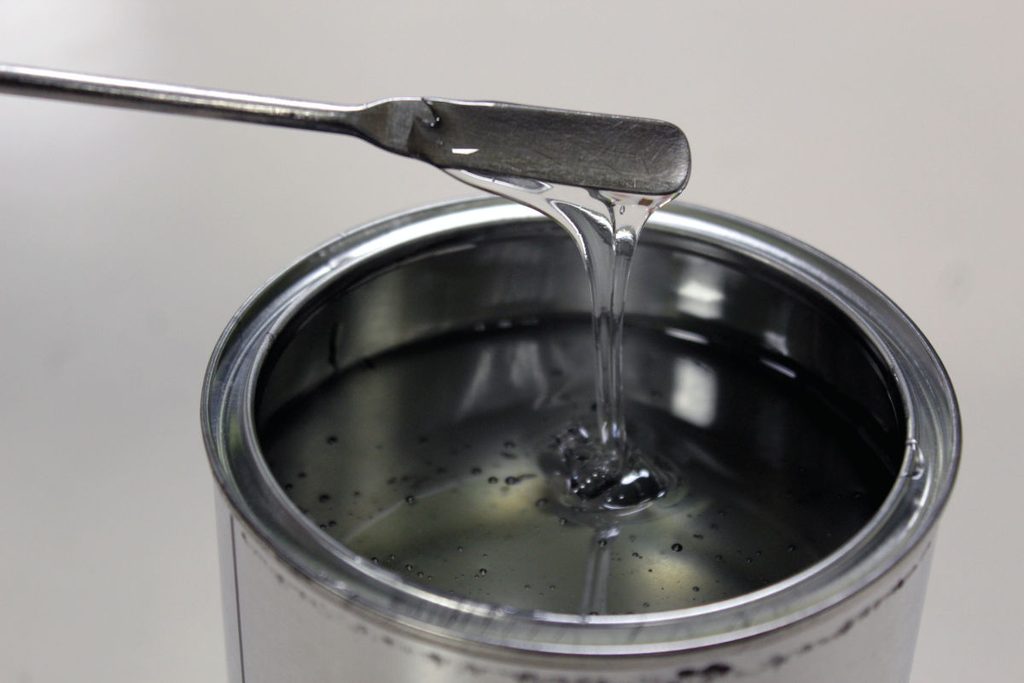
Viscosity Control in Resin Manufacturing — Why Resin Producers Specify the ATAC NuLine Cone & Plate Viscometer
Viscosity governs how a resin processes: how it wets reinforcement fibres, how it flows during moulding or lamination, and — for pre-preg resins — how consistently it behaves through the B-staging process as it’s partially cured and cooled for storage. A formulation that drifts outside spec — from a change in curing agent, catalyst level, or process temperature — can lead to poor fibre impregnation, inconsistent gel time, or out-of-tolerance tack and drape in the finished pre-preg, often not identified until lay-up.
Routine viscosity testing to ASTM D4287 and ISO 2884, the standard cone-and-plate methods for resins, paints and coatings, gives QC teams an objective checkpoint at each stage of production.
This is why resin manufacturers, including producers of pre-preg resin systems, specify the ATAC NuLine Cone & Plate Viscometer. Compact and robust enough to sit at-line on the production floor rather than confined to a lab, it delivers a result in seconds — so operators can verify consistency between batches, or track a resin’s viscosity profile as it advances through cure, without waiting on lab turnaround.
Six interchangeable cones cover 2 to 100 poise across shear rates of 20 to 10,000 sec−1, temperature is controlled to ±0.1°C, and every unit ships pre-calibrated and certificated, with USB output and free Windows software for direct logging into quality records.